 Foodora Wellness
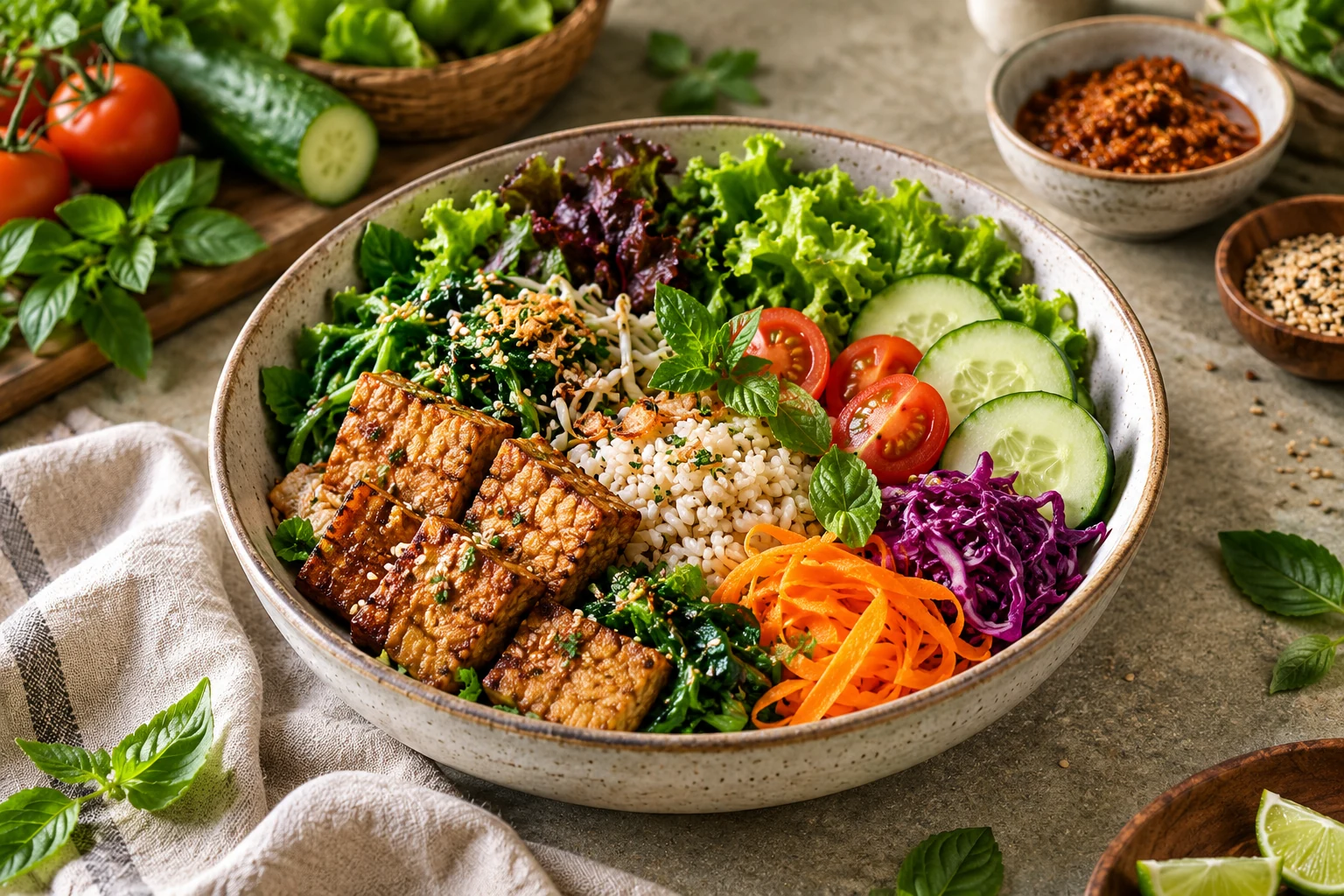
Picture a week of ordinary meals: rice and vegetables at lunch, a warm bowl of noodles in the evening, a shared table with family, and perhaps a simple breakfast before a busy morning. These meals can look different while still leaving room for balance and variety. A helpful way to begin is by noticing the food groups that appear across your plate rather than searching for one perfect recipe.
The balanced plate is a visual idea, not a set of strict measurements. It invites you to bring different textures, flavors, and familiar ingredients together. If you enjoy Indonesian staples such as rice, tofu, tempeh, and leafy greens, you already have plenty of ingredients to experiment with. Your plate can reflect your preferences, available produce, and the style of meal you are making.
Start with colorful produce
Vegetables bring variety in appearance, flavor, and cooking methods. Fresh cucumber offers a crisp contrast to sautéed spinach, while carrots, tomatoes, cabbage, and long beans work in a wide range of dishes. You might choose two different vegetables for lunch or include fruit as a part of another eating moment.
Color is a useful prompt for curiosity, but it does not need to become a complicated rule. When shopping at a market, see which vegetables look appealing and consider how they could work with foods you already have at home. Seasonal produce offers a natural reason to make small changes through the year.
Add a familiar grain or staple
Rice, noodles, bread, oats, potatoes, corn, and whole grains can provide a familiar center for a meal. Some people enjoy a bowl of brown rice with vegetables; others prefer white rice with shared side dishes. Exploring different staples can add interesting textures without requiring you to abandon everyday favorites.
If you cook for several people, it may be easiest to offer a staple alongside a selection of other ingredients. Each person can assemble a plate that reflects personal taste. A practical meal is one that works for the table in front of you.
Include an everyday protein choice
Tofu, tempeh, beans, eggs, fish, lentils, and other familiar foods can add variety to meals. Their flavors and textures change with cooking methods and seasonings. Tempeh can be served alongside rice and sautéed vegetables, while beans can be mixed with grains for a convenient bowl.
There is no need to use every possible food group in the same way at every meal. Consider the mix of foods over a broader routine and look for combinations you genuinely enjoy making.
Let flavor and enjoyment have a place
Herbs, spices, sauces, and cooking traditions give a meal its personality. A vegetable stir-fry with ginger feels different from a fresh salad with lime. A shared family meal may include several dishes, making the balanced plate idea less about one surface and more about the mix of foods available.
Three everyday combinations to explore
- Steamed rice, sautéed leafy greens, and tofu with a favorite sauce.
- A grain bowl with beans, fresh vegetables, and a citrus dressing.
- Oats with fruit in the morning, followed by a varied lunch built around household favorites.
These are flexible examples, not a fixed menu. Exchange ingredients according to season, appetite, preference, and what is already in your kitchen.
Make the idea work beyond one meal
Balance can be considered across a day or week rather than judged from one photograph of a plate. A rushed breakfast, a lunch eaten with colleagues, or a different dinner from the original plan can all fit into a thoughtful routine. Keep asking practical questions: What foods do I enjoy? Where would more variety be welcome? Which meal ideas are easy enough to repeat?
For more examples, visit the Nutrition Basics guide and the Meal Planning guide. Foodora Wellness encourages curiosity, simplicity, and everyday enjoyment, one meal choice at a time.